
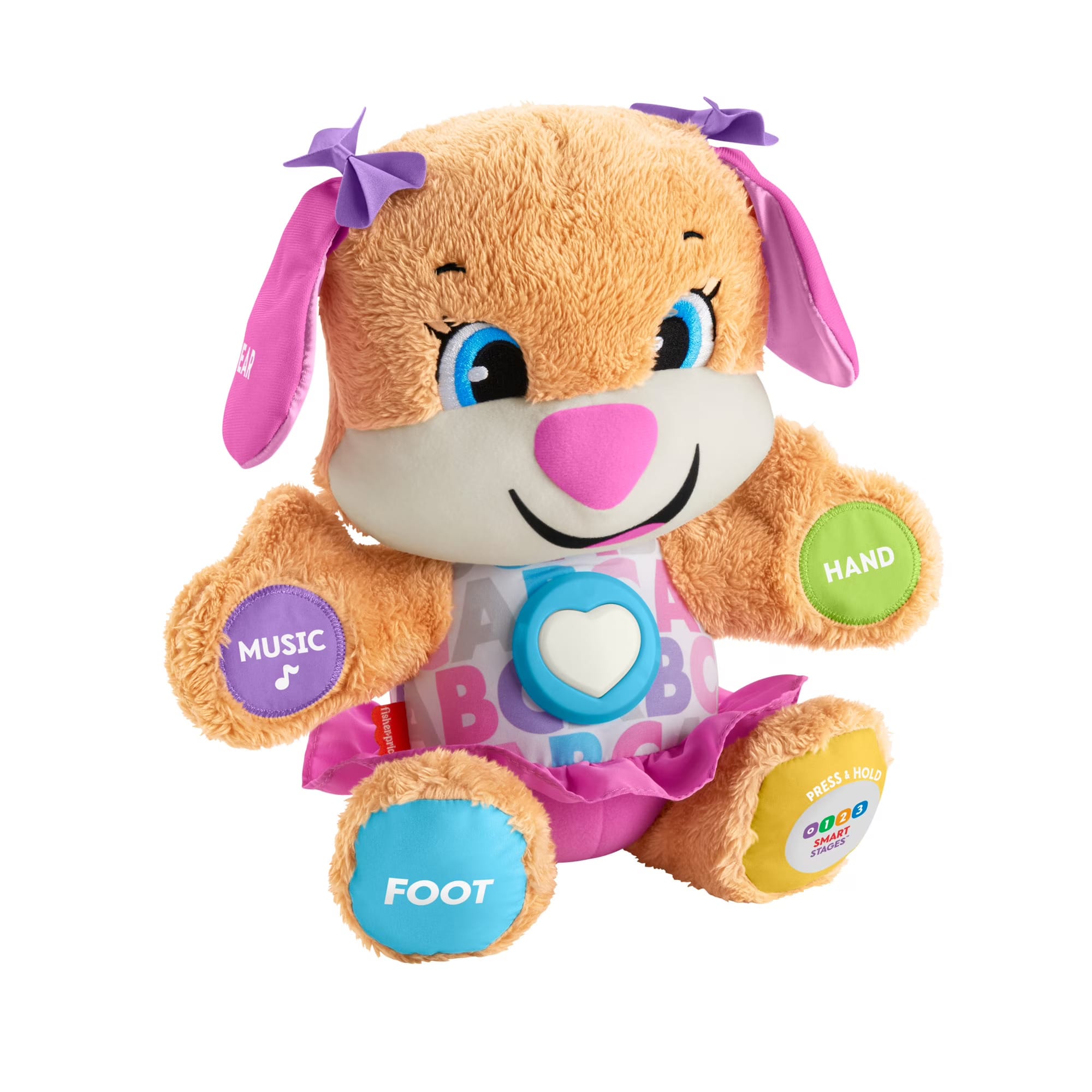
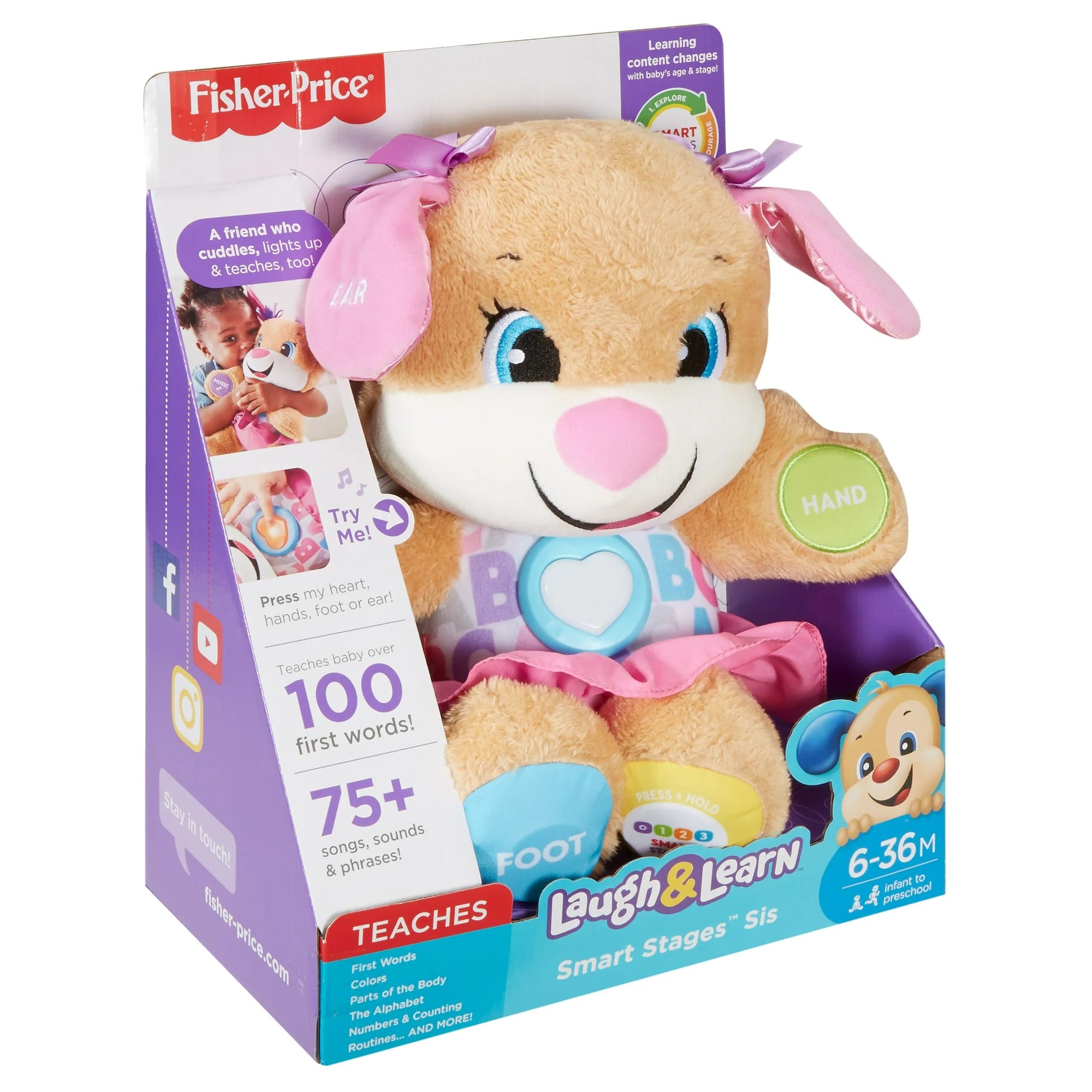












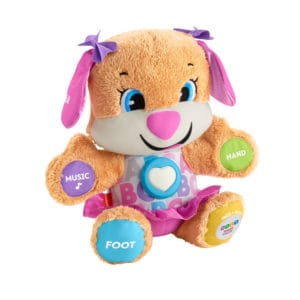
Fisher-Price Laugh & Learn Smart Stages Sis Puppy Plush Learning Toy for Baby, Infants and Toddlers, 6 months and up
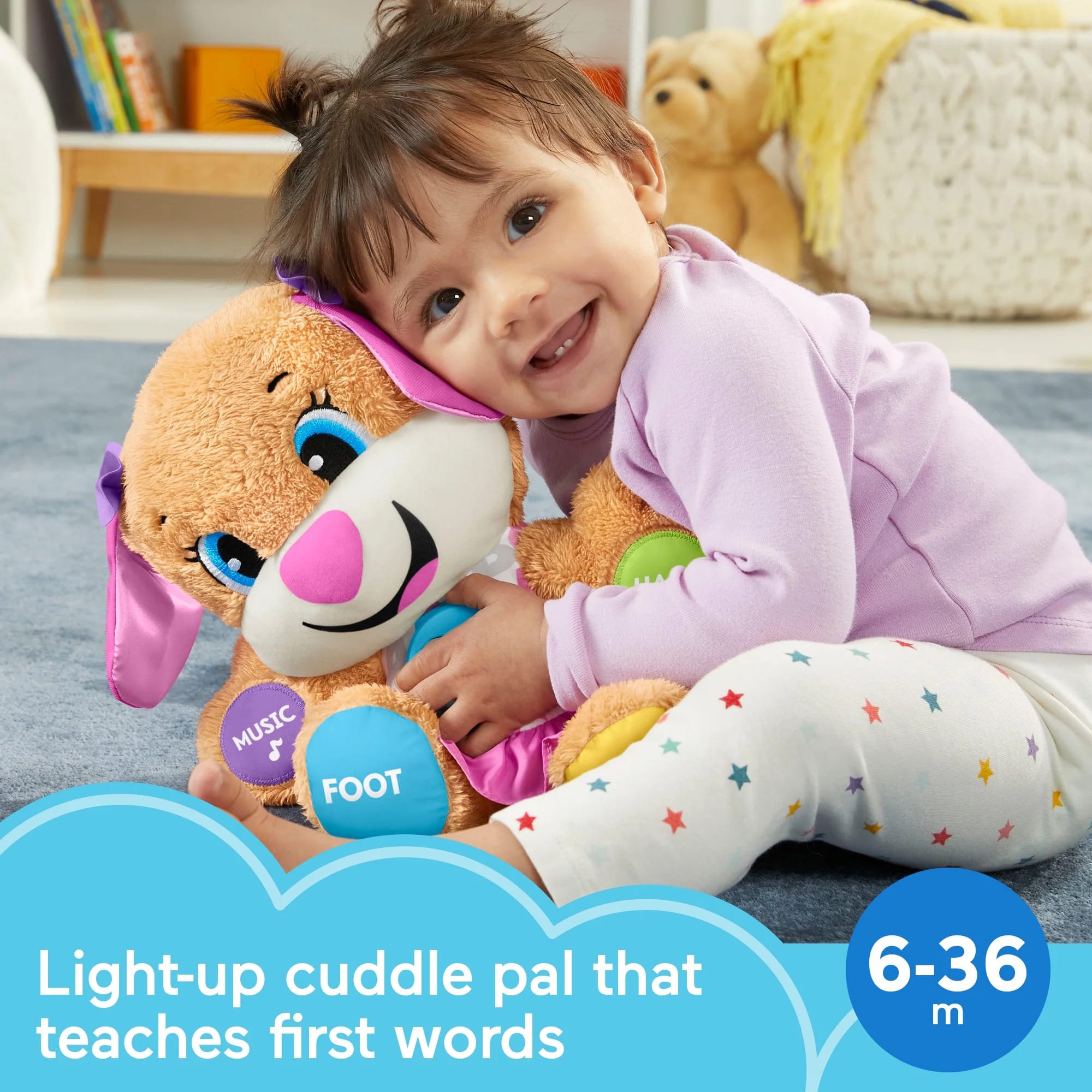
- Snuggly plush toy that teaches over 100 first words with 75+ songs, sounds, tunes and phrases
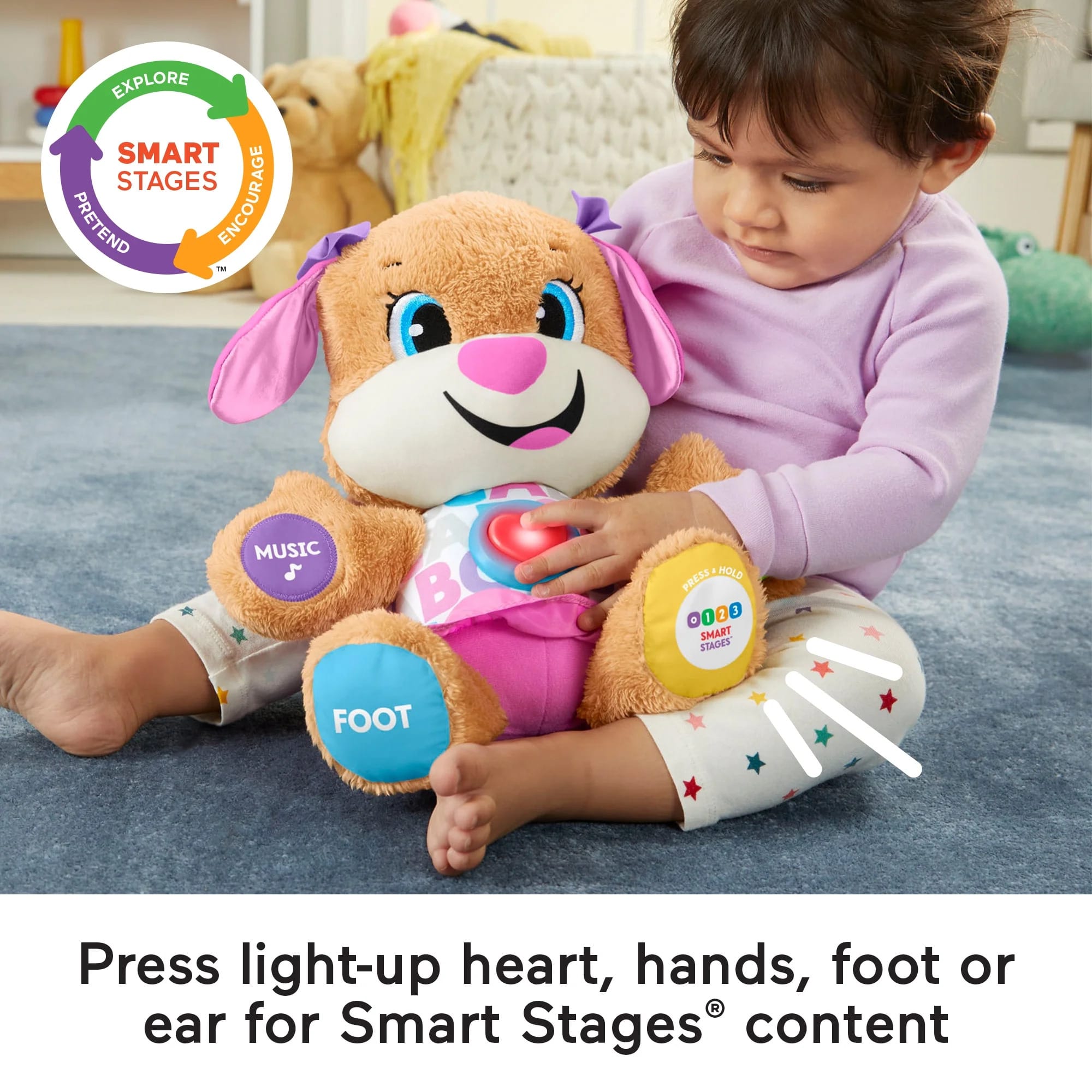
- Sis’s hands, foot, ear, and light-up heart respond to baby’s touch (5 activations in all!)
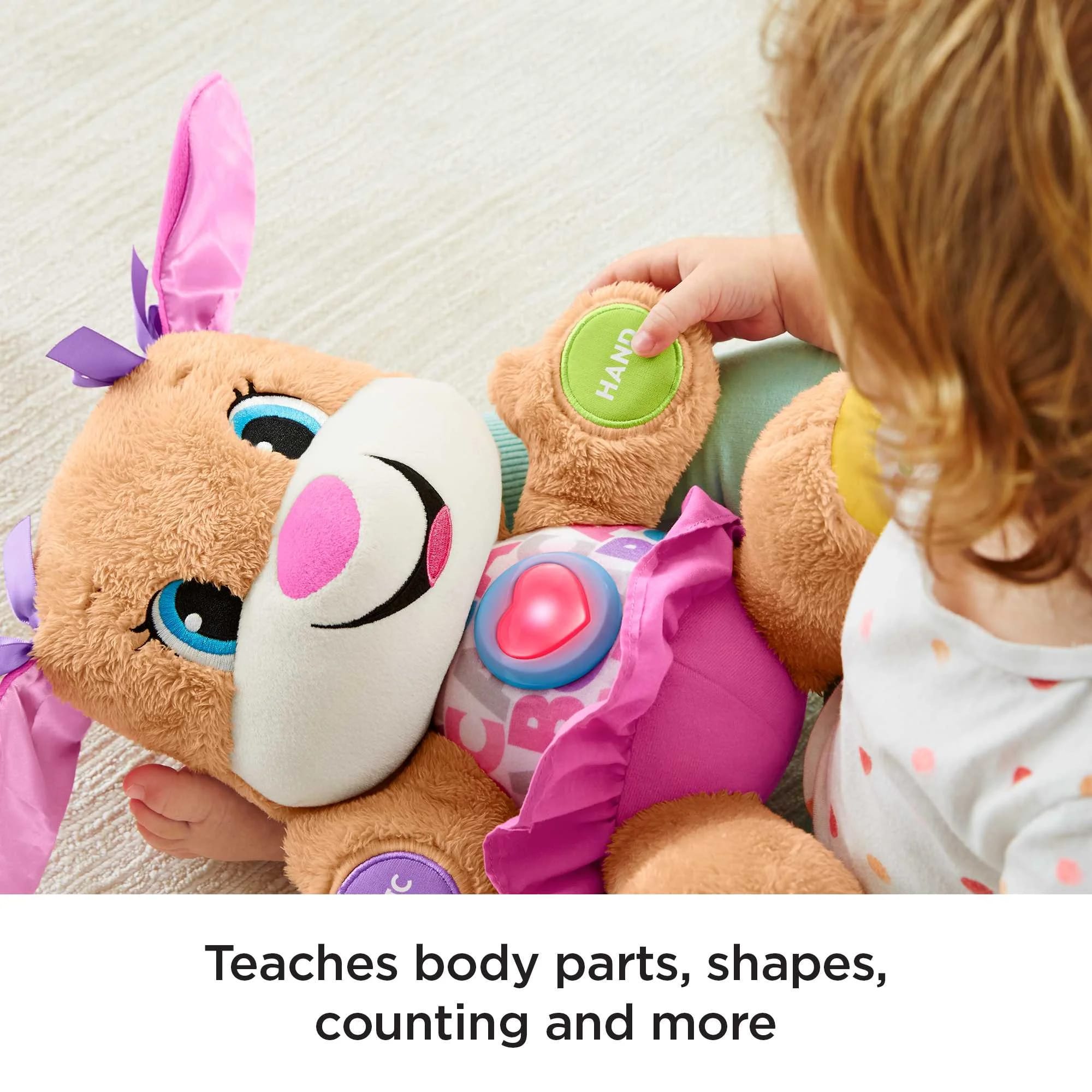
- 3 Smart Stages levels teach parts of the body, shapes, counting, the alphabet and more
- Press and hold Sis’s light-up heart to hear all her songs
- Great gift for infants and toddlers ages 6 months to 3 years old
- Smilestones: Bringing a smile to milestones! This toy helps foster language development, introducing your baby to First Words & encouraging labeling and singing along
Materials
The toy is a mixed-material, interactive plush toy. Key components include:
| Part / Component | Likely Material(s) | Notes / Sources |
|---|---|---|
| Outer “plush” / soft shell / fabric body | Soft fabric / plush (likely polyester or synthetic fibers) | Described as “plush toy” in many product listings; the toy is not intended to be machine‑washed. |
| Hard / plastic parts (buttons, light-up heart, housing for electronics) | Plastic | Listings mention “Material: Plastic” for parts of the toy. |
| Internal electronics & circuit components | Circuit board, sensors, wires, LEDs, battery compartment (plastic/metal) | The interactive (touch, sound, light) functions require these internal parts. The user manual refers to cleaning the unit by surface wiping, implying embedded electronics. |
| Filling / stuffing | Polyester fiberfill or similar synthetic fill | Common in plush toys; while not explicitly stated in all sources, the fact it is a soft toy implies internal stuffing. The user instructions warn against immersion in water (i.e. internal parts must be protected). |
Safety Notes & Care Instructions
From the Fisher‑Price user manual and other sources, here are important safety and maintenance guidelines:
-
Cleaning
-
Surface wash only. Use a damp cloth with mild soap to wipe down the plush parts. Do not immerse the toy in water.
-
After cleaning, let the toy air-dry completely before using again.
-
-
Battery care
-
Remove batteries if the toy will not be used for a long time, to avoid battery leakage.
-
When disposed, batteries should be disposed of responsibly as per local regulations.
-
-
Storage
-
Store the toy in a cool, dry place away from direct sunlight when not in use.
-
-
Assembly / maintenance
-
Ensure all packaging attachments are removed before giving to a child.
-
Check that screws and plastic parts remain tight and undamaged over time — loose parts could be a hazard. (While not spelled out in every manual, this is standard good practice for toys with hard parts and electronics.)
-
-
General safety / supervision
-
Because the toy has electronic and plastic parts, monitor for wear, cracks, exposed wiring, or broken parts.
-
Avoid using or letting children play with the toy if any components are broken or damaged.
-
Supervise use, particularly for younger toddlers, to prevent small parts (if they become loose) from becoming choking hazards.
-
The toy should comply with relevant toy safety standards (for your country) — e.g. restrictions on lead, phthalates, flame retardancy, small parts, etc.
-
Ensure the battery compartment is secured (often with a screw) so the user (the child) cannot access the batteries.
-
-
Limitations of cleaning
-
Since electronics are present, the toy is not washable in a washing machine. The surface-only cleaning warning implies that internal circuits are vulnerable to water intrusion
-

What others are saying
There are no contributions yet.